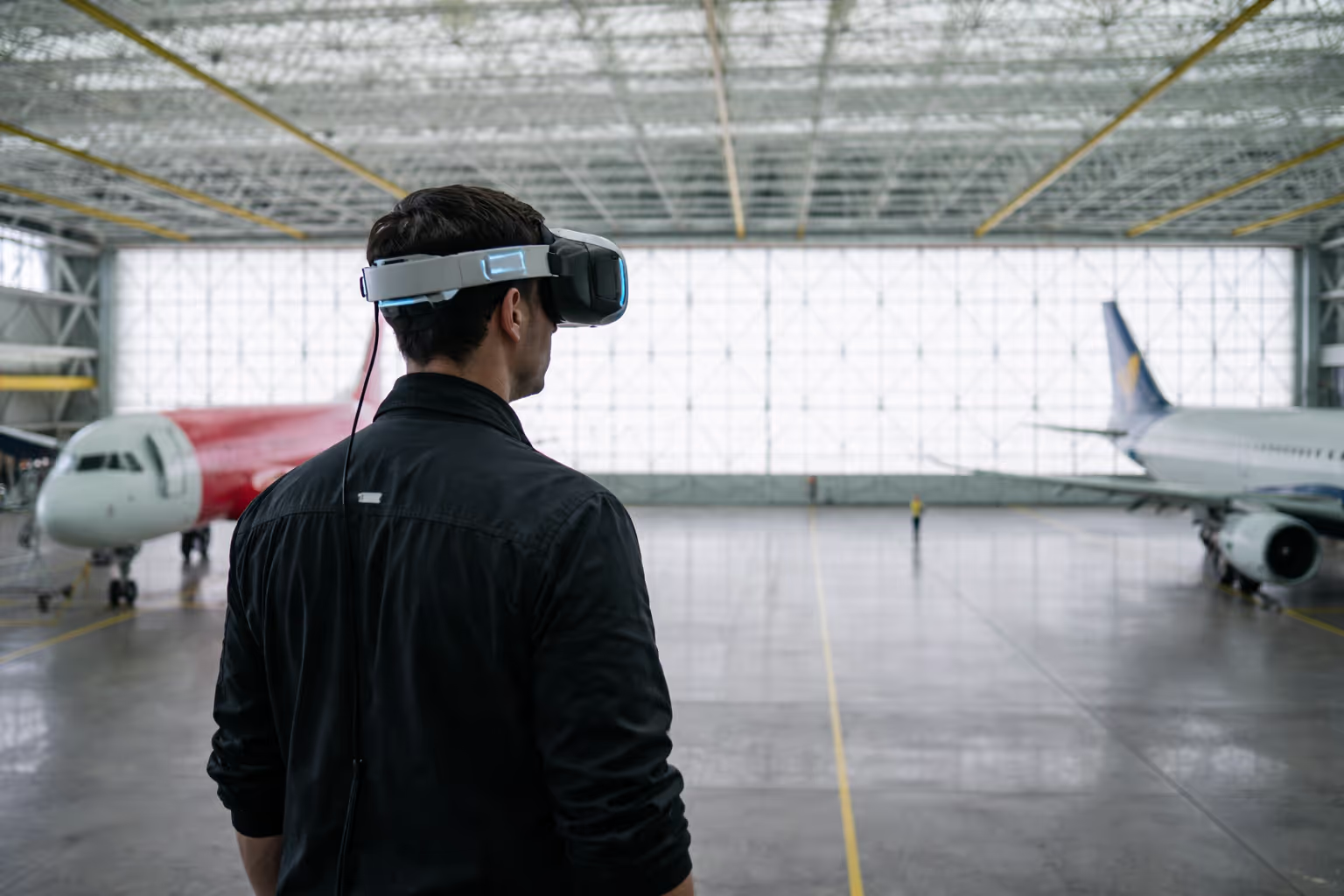
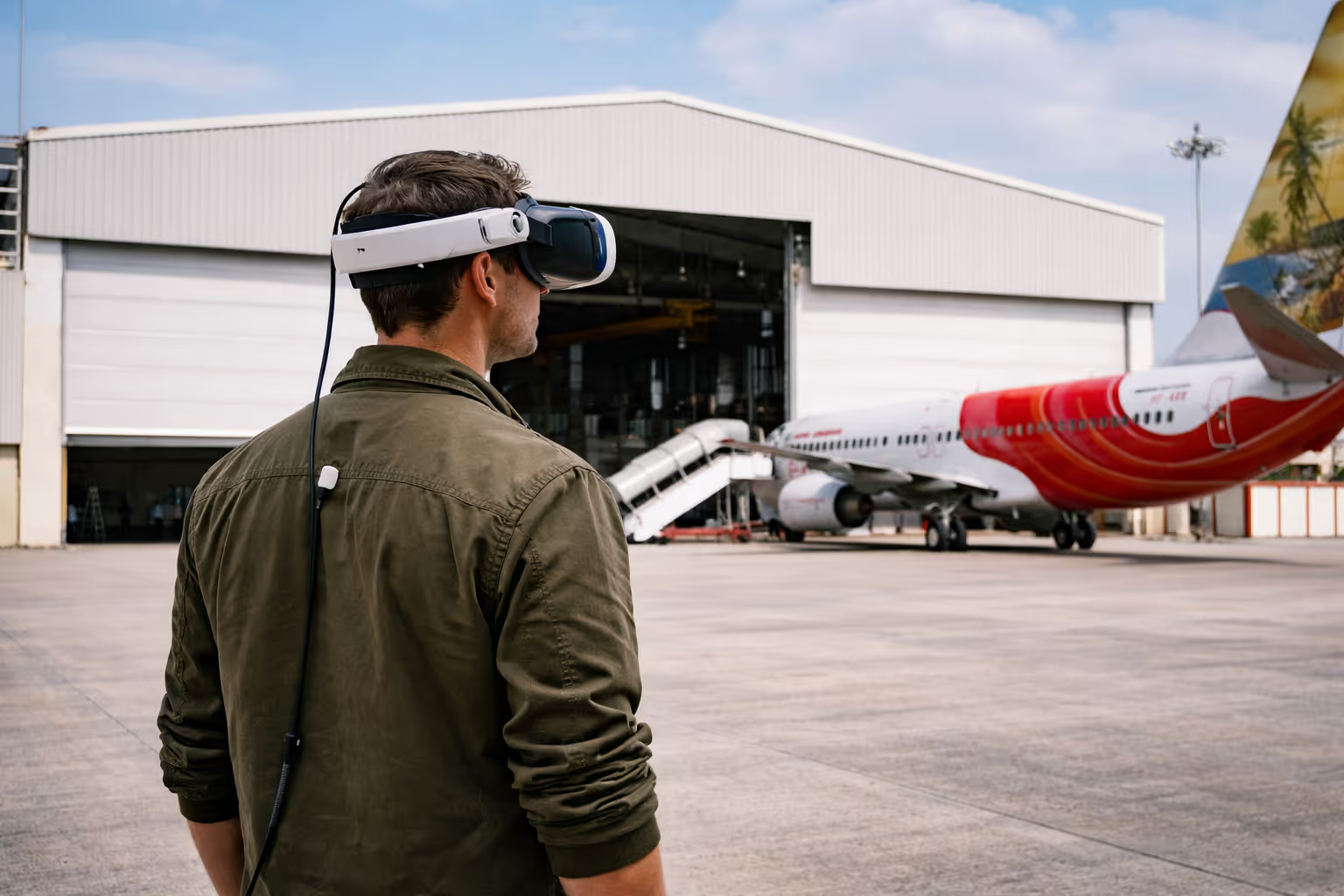
Gandhi Automation, one of India’s foremost manufacturers of large-scale hangar doors, faced a challenge familiar to every industrial B2B brand: how do you communicate the true scale of a product that is defined by its physical presence?
The answer was a 4K 360° VR experience built by Metaverse911 — a single reusable asset that places aviation decision-makers inside a live, deployed hangar site, at true scale, in seconds. Today, the experience serves as Gandhi Automation’s primary demonstration tool across more than 30 aviation exhibitions per year, spanning six countries.
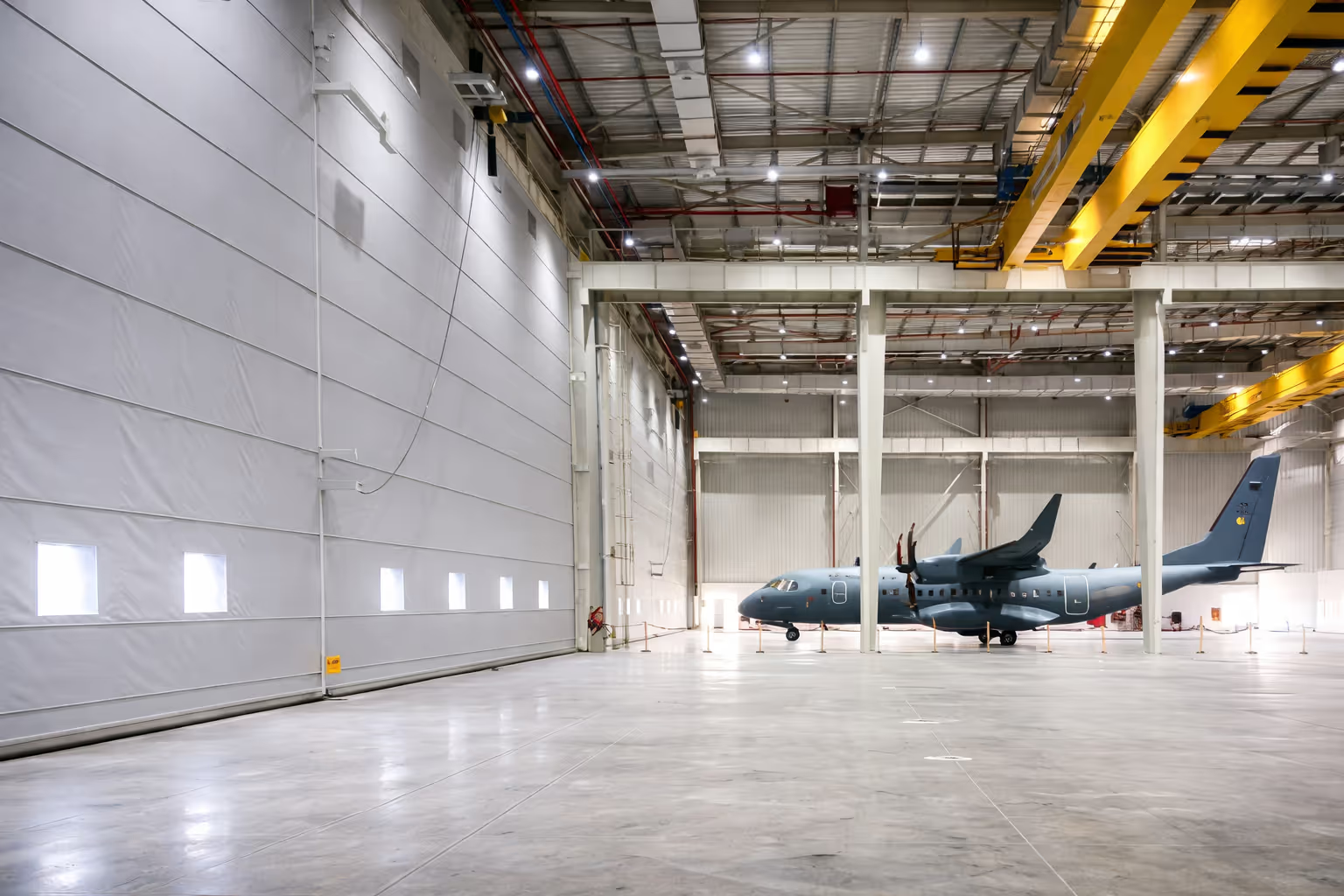
Gandhi Automation specialises in the engineering, manufacture, and installation of large-format hangar doors and industrial door systems. Their projects span airports, defence facilities, MRO hangars, and aviation infrastructure across India, Indonesia, Malaysia, Dubai, and several other markets.
Operating at this scale means a single installation is a months-long engineering programme. The commercial challenge is equally significant: selling a product defined by height, width, and structural complexity to procurement heads and infrastructure owners who may never visit a live site before making a decision.
Aviation and industrial procurement involves high-value, long-decision-cycle products. A brochure, a photograph, or even a video of a hangar door can approximate scale — but it cannot recreate the experience of standing inside a structure that fills an entire aircraft bay.
For a brand participating in 30+ aviation and aerospace exhibitions per year — including major airshows in India and internationally — this gap between reality and representation carried real commercial risk. Decision-makers visiting Gandhi Automation’s exhibition booth needed to feel the scale, not simply read about it.
The question was not whether immersive exhibition technology could solve this — the question was how to build a single, scalable solution that would work at every event in the global calendar, requiring no incremental production cost per show.
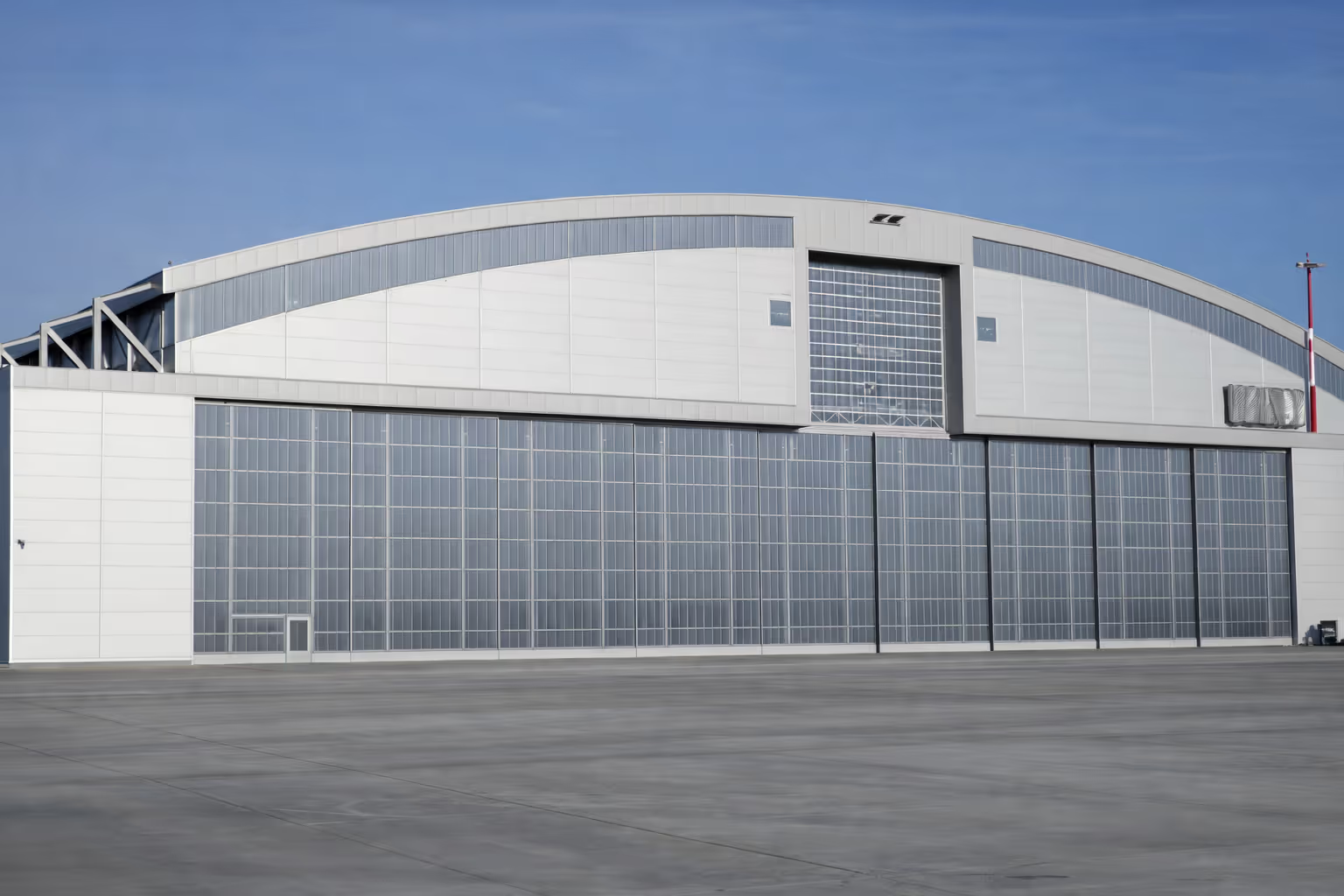
Metaverse911 designed and delivered a 4K 360° virtual reality experience capturing Gandhi Automation’s live client installations across their international portfolio. The experience places a viewer directly inside the hangar environment — surrounded by the full operational scale of the doors in real-world context.
Unlike traditional video documentation, the VR product demonstration format is spatial. A prospect at any aviation trade show booth can put on a headset and be transported to a deployed site in Dubai, a facility in Indonesia, or a maintenance hangar in India — all within seconds. The scale, depth, and operational context that photography eliminates are fully preserved.
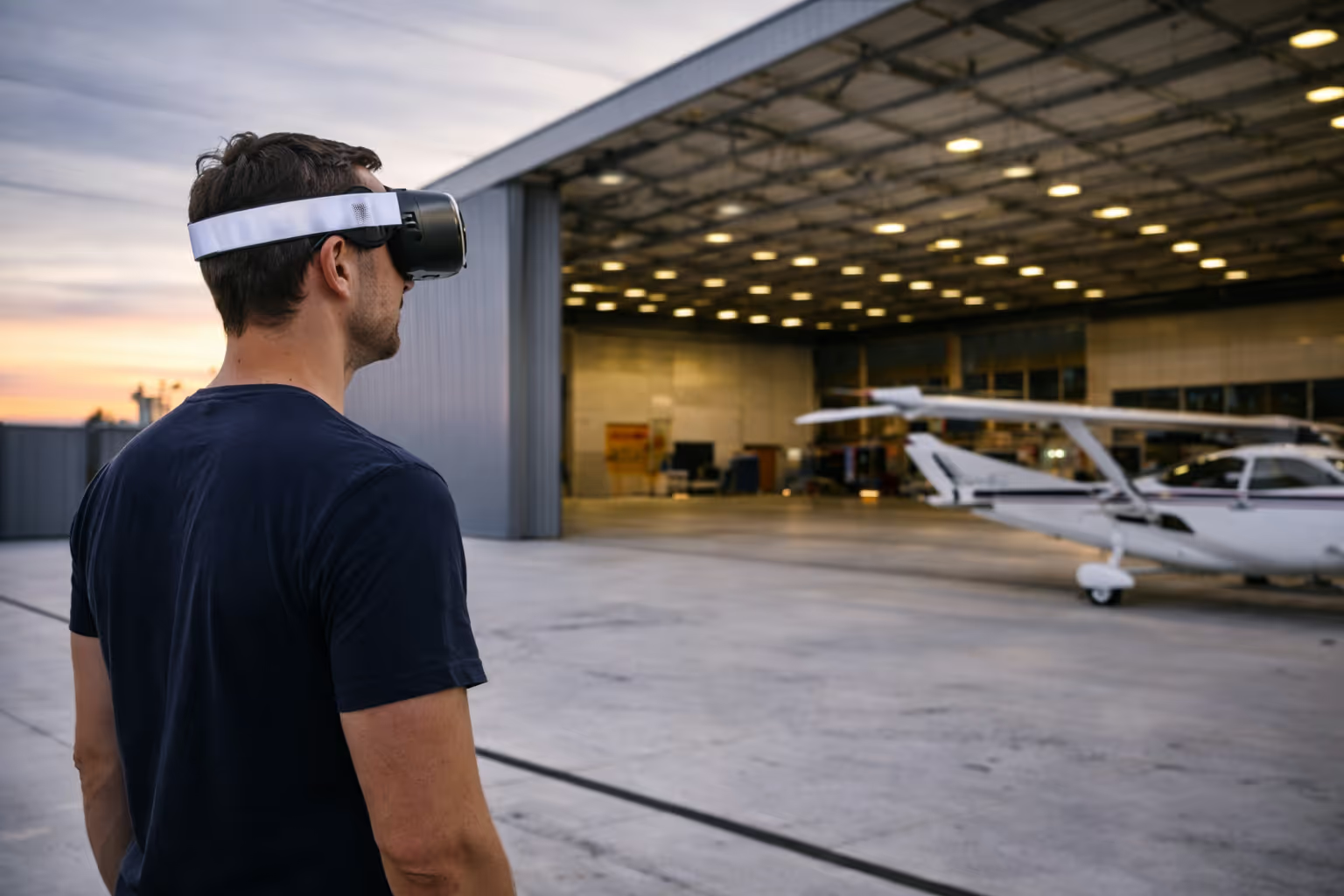
Ultra-high-resolution 360° capture of live Gandhi Automation client sites, preserving true spatial scale and operational context in every direction.
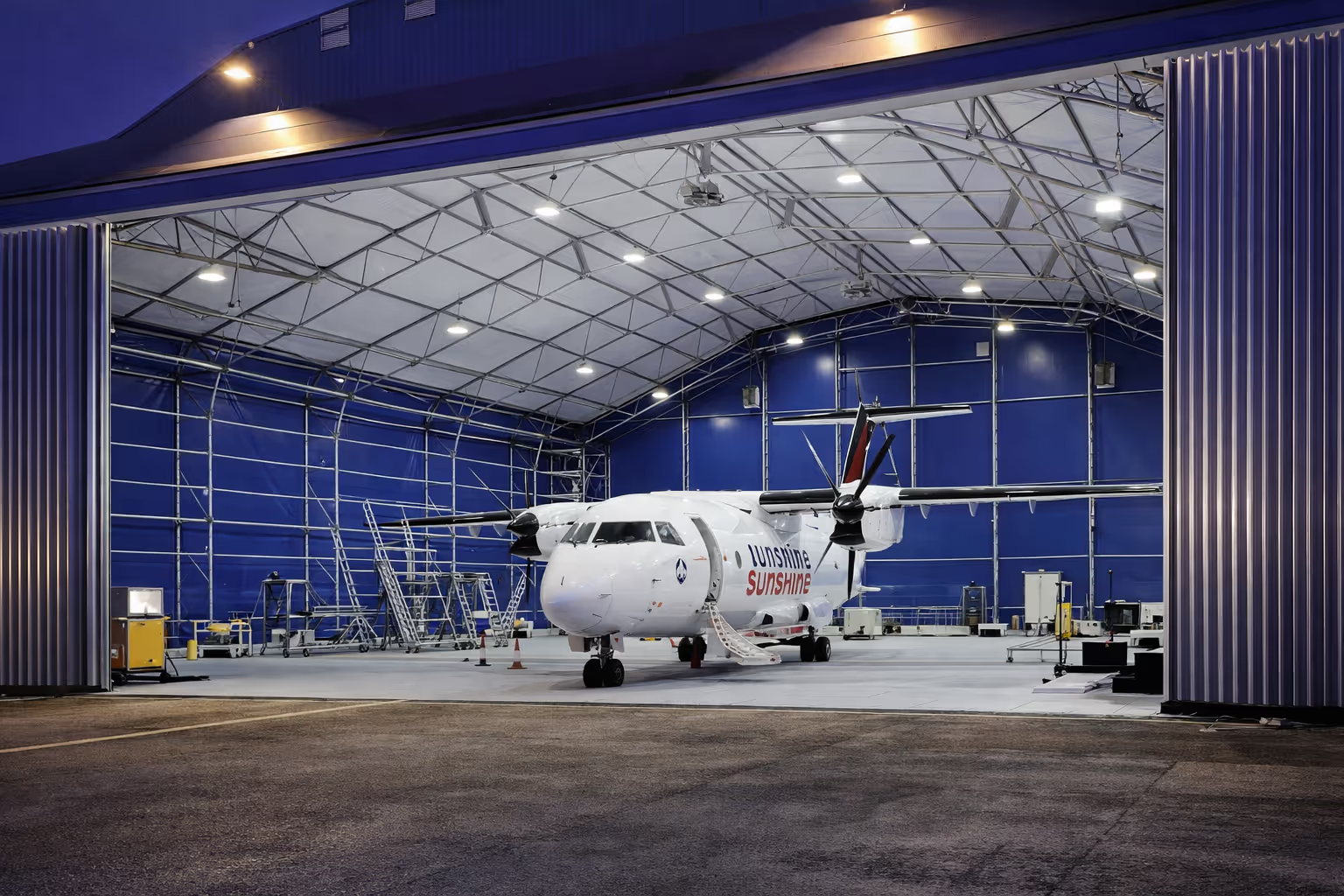
Installations captured across India, Dubai, Indonesia, and Malaysia — one headset, multiple real client sites, all accessible from a single exhibition booth.
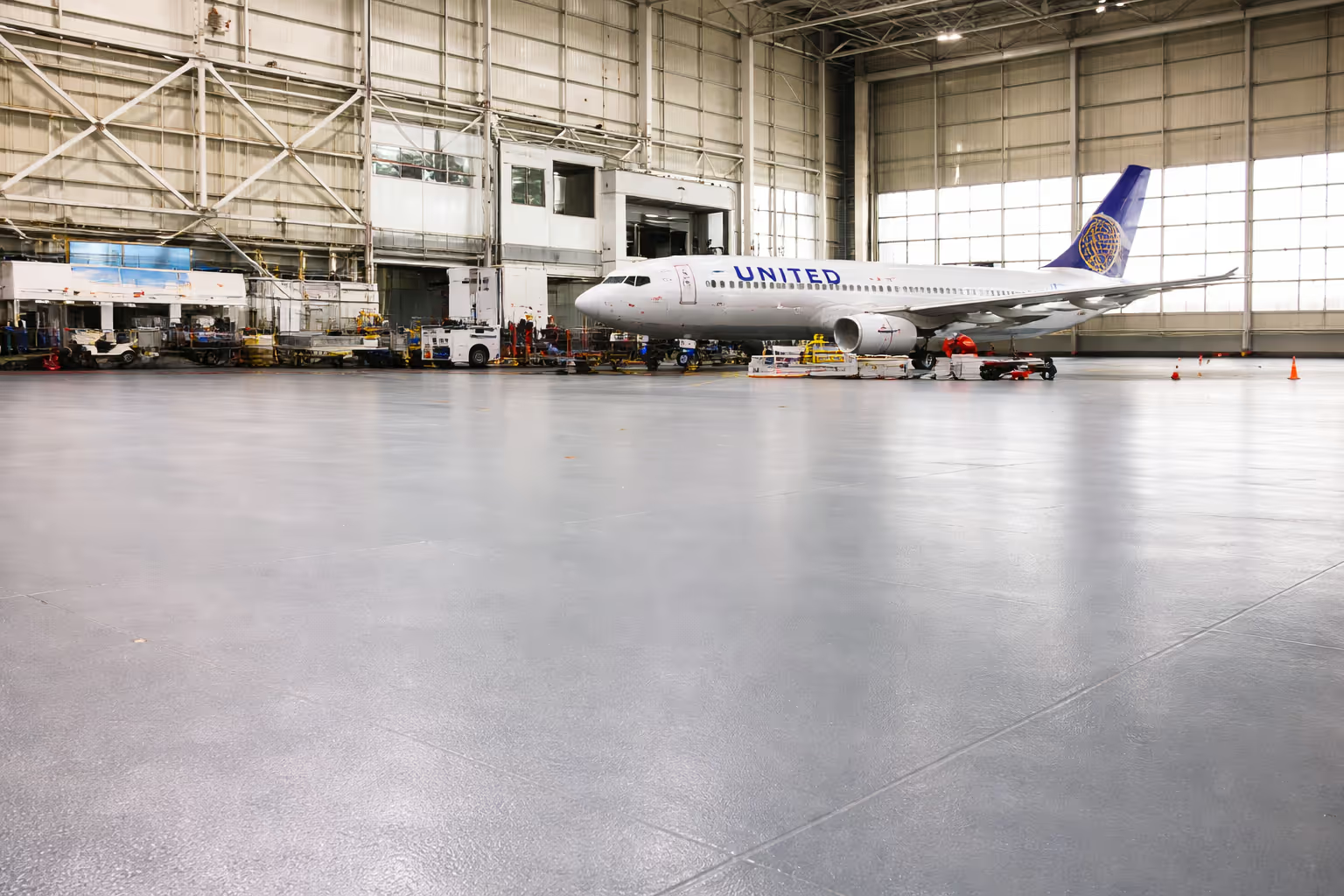
One production investment, deployed across 30+ shows per year in 6 countries. Zero incremental cost per event, maximum demonstration impact at every booth.
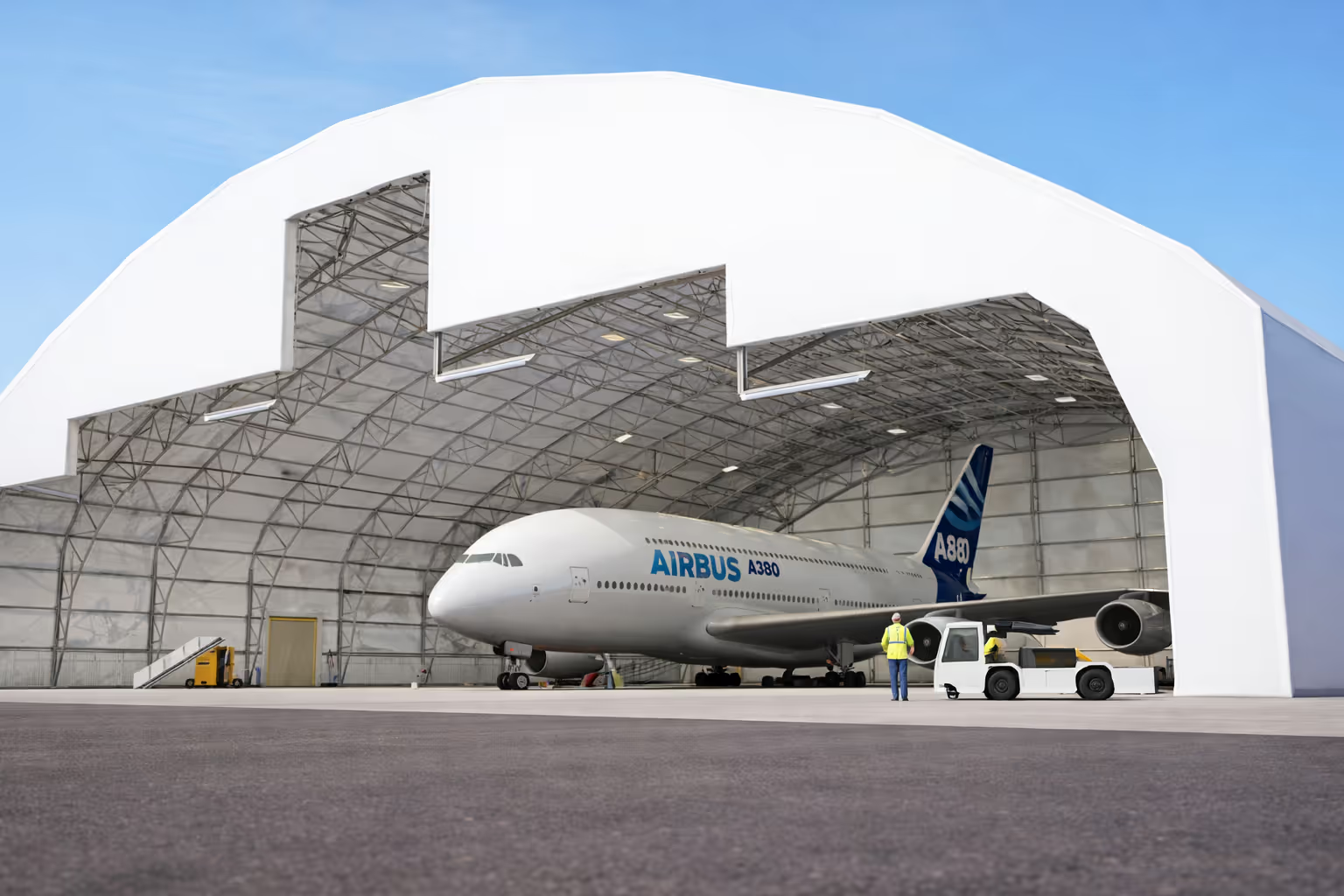
Aviation and industrial procurement is not impulse-driven. Every hangar door purchase is a six-to-twelve month process involving engineering teams, procurement committees, and infrastructure directors. The VR experience works because it matches the seriousness of the decision — and collapses the distance between a trade show booth and a live deployment.
Below are the three specific reasons why the 360° VR format outperforms every traditional exhibition tool Gandhi Automation had previously used.
A Gandhi Automation hangar door is 30+ metres wide and 12+ metres tall. It is not a product you can photograph or describe into comprehension. The VR format is the only medium that preserves spatial scale at the point of decision — placing a prospect inside the real structure, at the real size, without leaving the trade show floor.
Procurement stakeholders rarely visit live installation sites before signing off. The VR content captures multiple real deployed sites — in India, Dubai, Indonesia, and Malaysia — and makes them instantly accessible. A decision-maker in Singapore can walk through a live installation in a Mumbai airport in under 60 seconds.
Traditional exhibition materials are expensive and event-specific. The VR experience is produced once and deployed at every show in the calendar. 30 exhibitions across 6 countries, zero per-event production cost. The asset does not age, it does not require rebuilding, and it requires no dedicated exhibition infrastructure beyond a headset.